Library
The thinking behind the work.
We publish frameworks, models, and protocols from real engagements in full. Each piece names the problem it addresses, the model behind it, and the limits of its application. You can read and download all of them for free, without registering.
 Recurring revenue
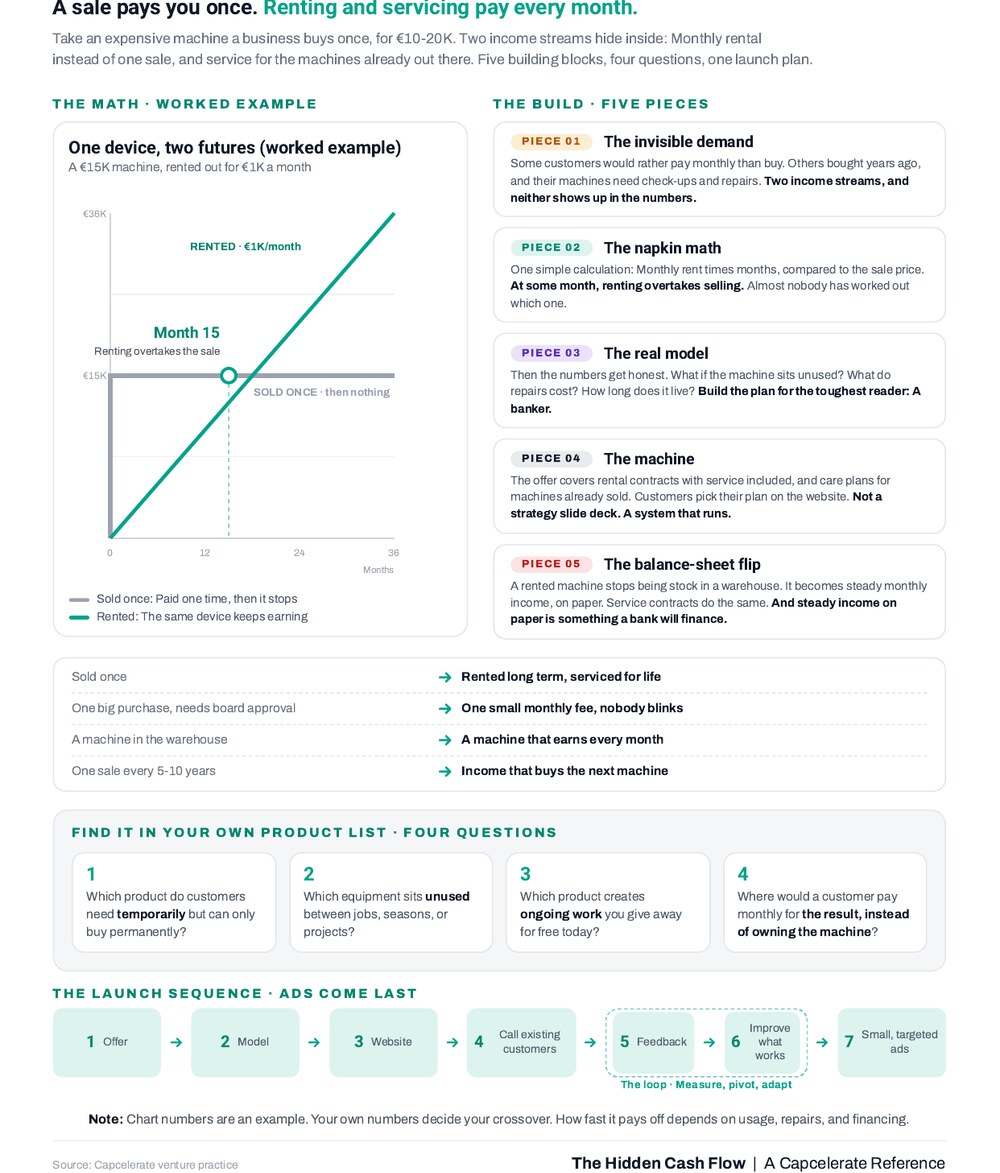
The Hidden Cash Flow
A sale pays once. Renting and servicing the same machine pay every month.
For manufacturers and distributors of capital equipment, the one-time sale is the visible number. Yet the aftermarket is often larger and richer. McKinsey's analysis across industries puts service and parts near a 25 percent operating margin. New equipment earns about 10 percent. Over an asset's life, the aftermarket can be several times the original sale. A parallel shift the industry calls servitization has spread. Hilti rents tools with guaranteed availability, and Kaeser sells compressed air rather than compressors.
 Lead generation
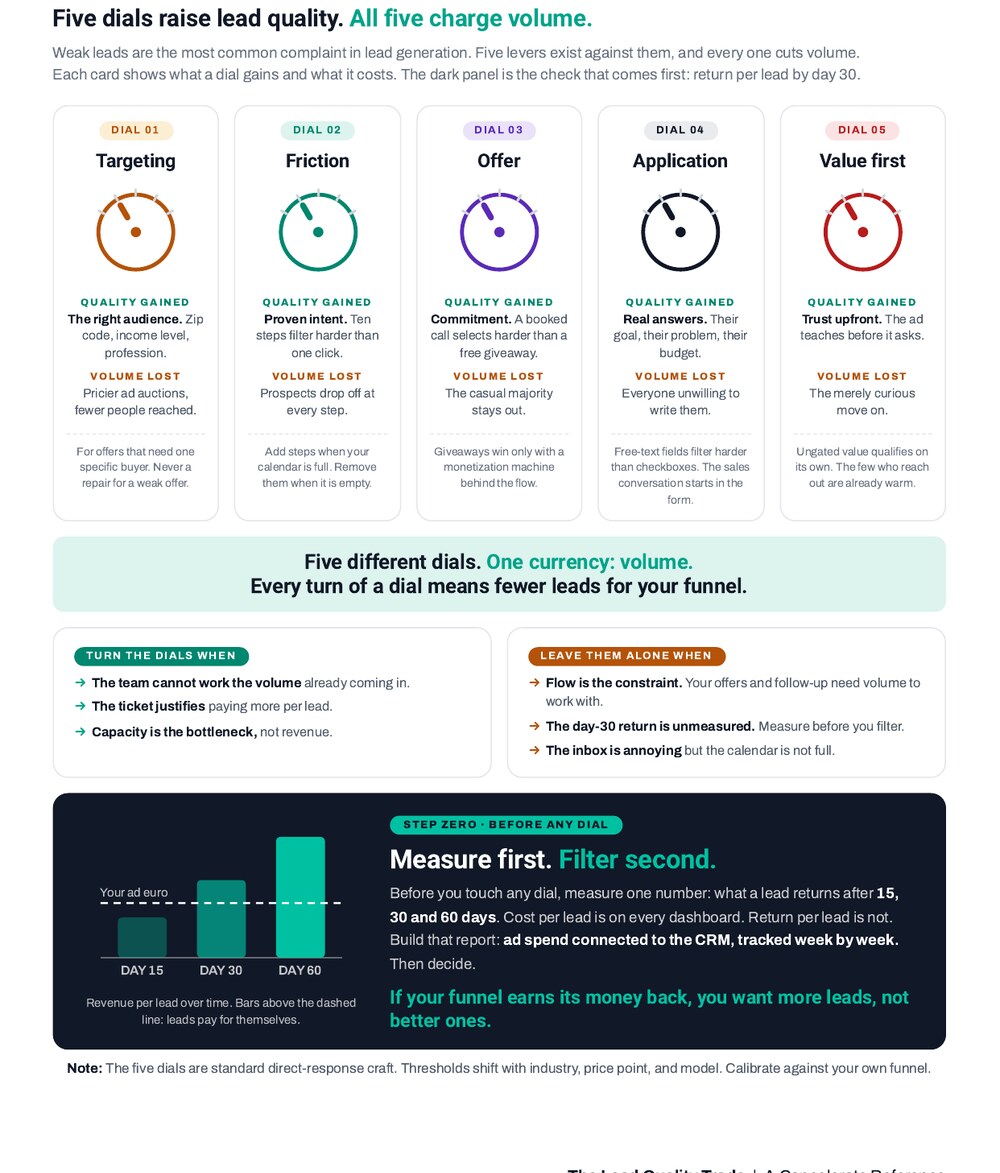
The Lead Quality Trade
Every dial that raises lead quality costs volume. Measure return per lead before you turn one.
The standard responses to weak leads are well understood. Direct-response practice rests on a simple tension: anything that raises lead quality also lowers the number of leads. Tighter targeting reaches fewer people at a higher auction price. More form fields filter for intent and lose the casual majority. A harder ask, like a booked call instead of a free download, selects for commitment and thins the pipeline. Each lever works, and each is paid for in the same currency.
 Funnel conversion
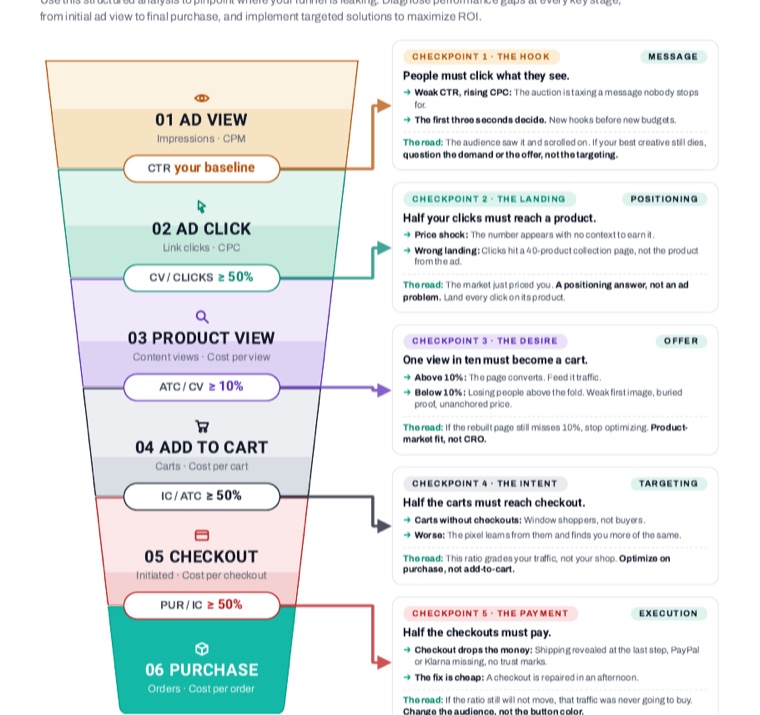
The Funnel Leakage Diagnosis
ROAS tells you money is leaking. The ratios tell you where.
Paid channels report through a blended, lagging number. Return on ad spend compresses a six-stage journey into one figure, which lands after the budget is spent. It also flatters itself. Meta and Google can each claim the same purchase, so platform-reported returns usually run ahead of the real one. Meanwhile a typical online store converts a low single-digit share of its visitors, a range industry benchmarks have held for years. Most of the spend is lost between the click and the order, and the blended number does not say where.
 Channel governance
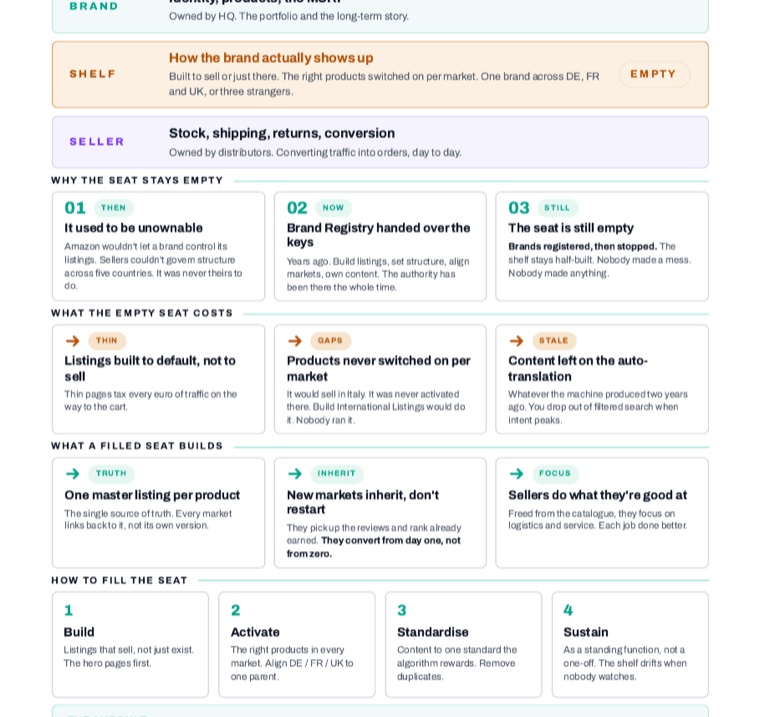
The Amazon Shelf Layer
The unowned layer between brand and sellers. It decides how the whole brand shows up.
On a marketplace, a brand's presentation is a job someone has to do, and often nobody does it. Amazon's Brand Registry gives an enrolled brand real control over its own listings: titles, images, structure, and content. With an EU trademark, that control can extend across the European marketplaces at once. What Brand Registry does not do is clear the shelf. Other sellers can still list authentic products, and when several sellers share a listing, they compete for the Buy Box. So the way a brand looks across Germany, France, and the UK does not maintain itself and has to be governed.
 Scale-up path
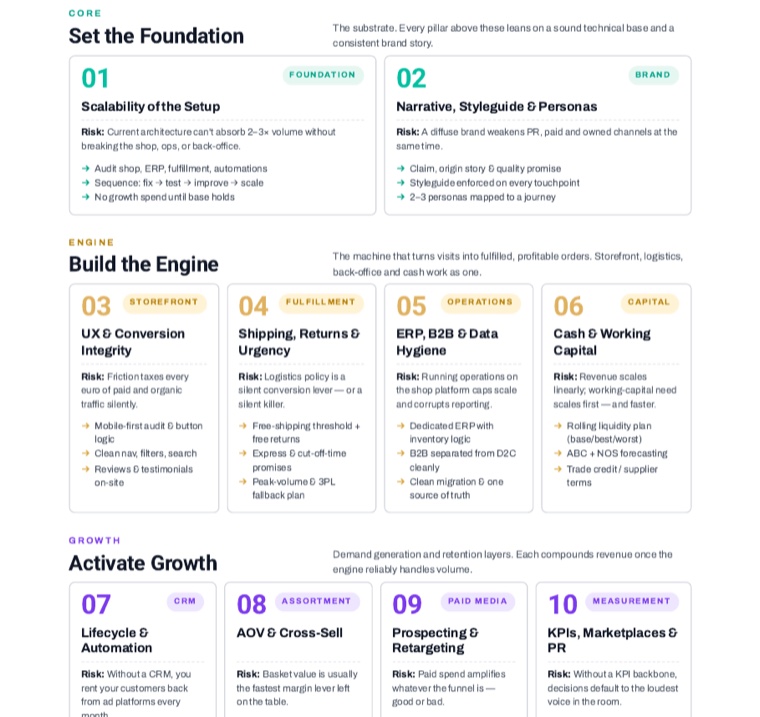
The 10 Pillars of E-commerce Scale-Up
The diagnostic walk from €400K to €3M. What has to hold before growth sticks.
Scaling an e-commerce business is usually framed as a traffic problem, where more spend means more growth. The uncomfortable part is that paid traffic amplifies whatever it hits. If the shop converts poorly or returns run high, more budget multiplies the loss instead of the revenue. A conversion rate in the low single digits is normal, and in some categories return rates run above thirty percent. Neither averages out at volume. They compound.
 Cash flow
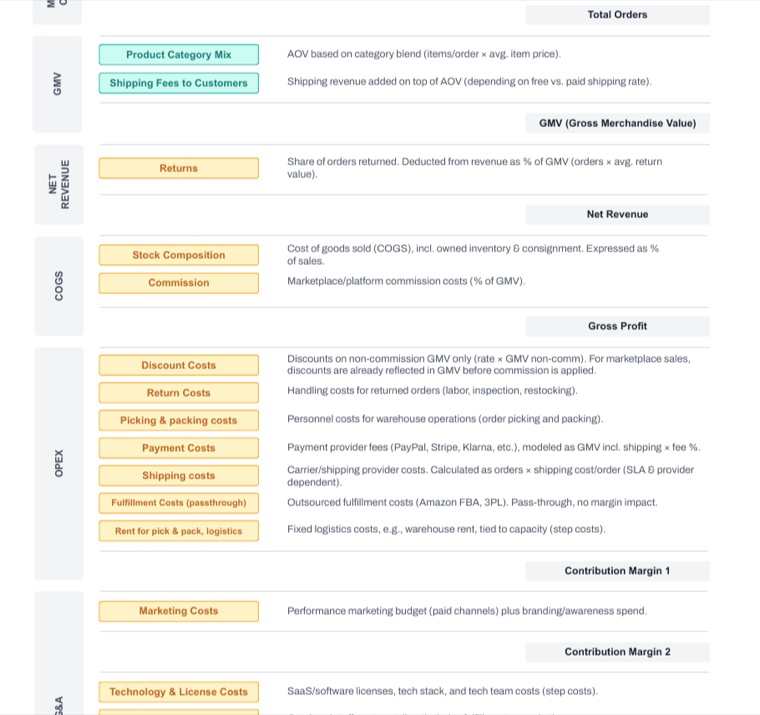
The Direct Selling Order Flow Model
Revenue is not cash flow. This model shows where the cash gets stuck.
A growing store can be profitable on paper and still run out of cash. The reason is timing. You pay for inventory weeks or months before it sells, payment processors hold settled funds for days, and marketplace payouts add another lag. The gap between paying suppliers and collecting from customers is the cash conversion cycle, and it widens just when sales accelerate. This is why founders watch a healthy P&L and an empty bank account at the same time.
 Operating intelligence
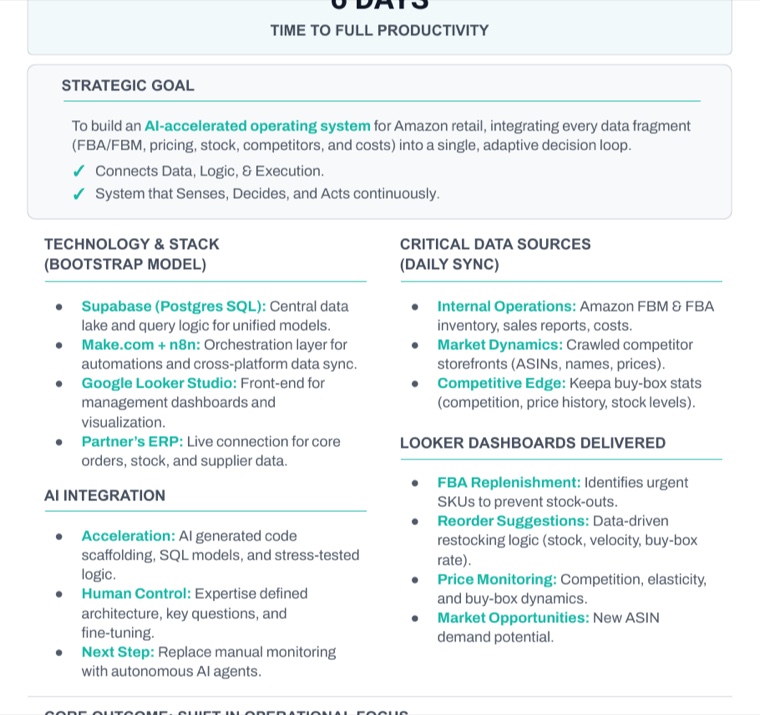
The Amazon Intelligence Layer
Real-time marketplace, batch-process operations. The layer that closes the gap.
As an operation grows, each of those places gets its own tool that works well on its own. The trouble starts when one decision needs all of them at once. Finance exports CSVs, stitches the reports together and hopes nothing is missing. By the time the reorder or the price change goes out, the marketplace has moved on, and the business is acting on a slightly old picture.
 Business models
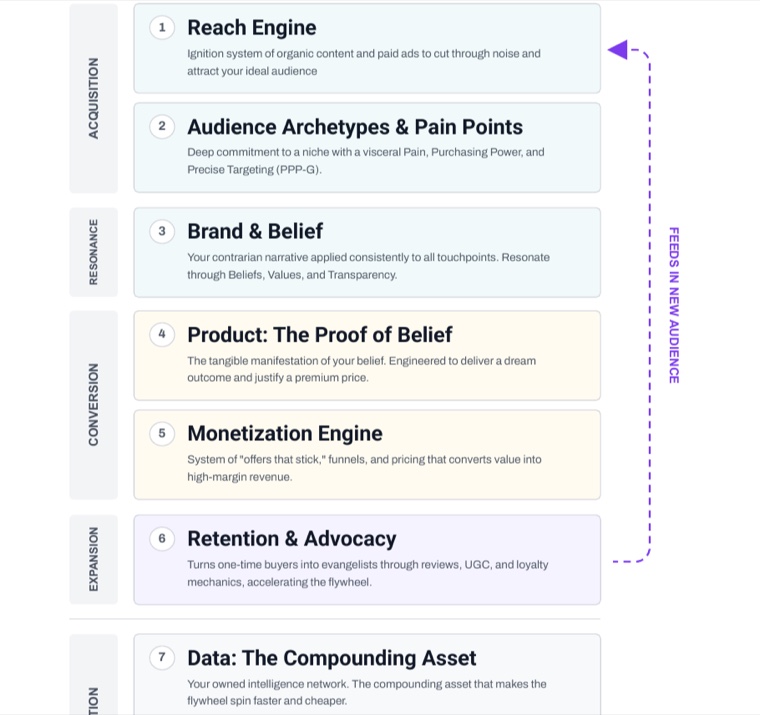
The Value Layer Framework
Where value is created, where it is captured. And how to build the moat between.
That manufacturer creates value in the product and captures little of it. The dealers own the customer relationship, the price the customer sees and the record of who bought. Spend on reach makes the product better known, while much of the margin and the buyer data stay with the dealers. Strong distribution with an interchangeable product has the mirror problem: it owns the customer, but nothing a rival could not stock tomorrow.
 Building fast
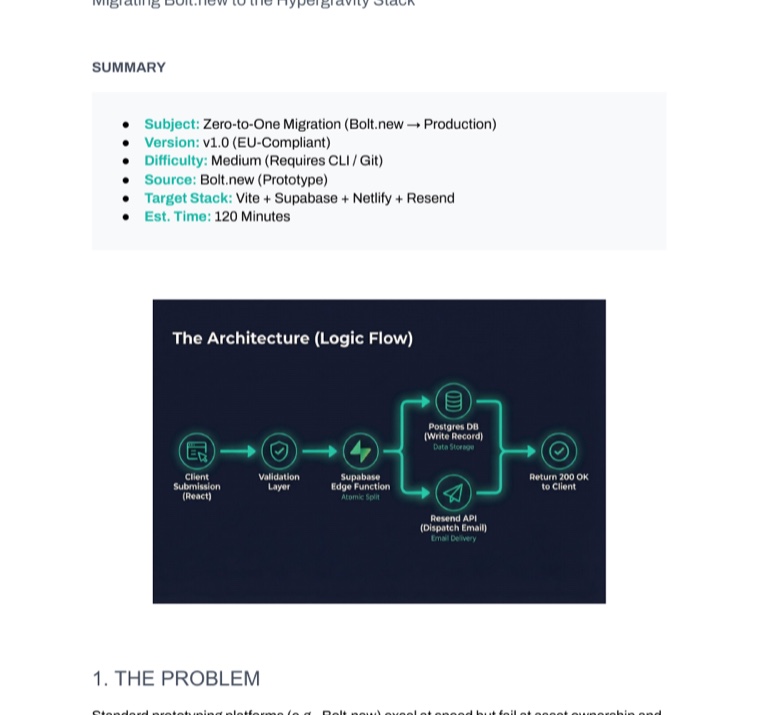
The Hypergravity Deployment Protocol
From prototype to production in hours. The stack that is live fastest wins.
Getting a product live has never been faster, and the speed hides a cost. No-code and low-code platforms can put a prototype in front of users in days. They also tend to keep the product on the platform's own infrastructure, which turns into two problems as it grows. The first is rent. Moving a prototype to production usually starts a monthly bill for servers and databases, and that bill runs whether anyone is using the app or not. This protocol calls it the idle tax. It puts the figure at roughly thirty to two hundred dollars a month before the first real user.
 The bigger picture
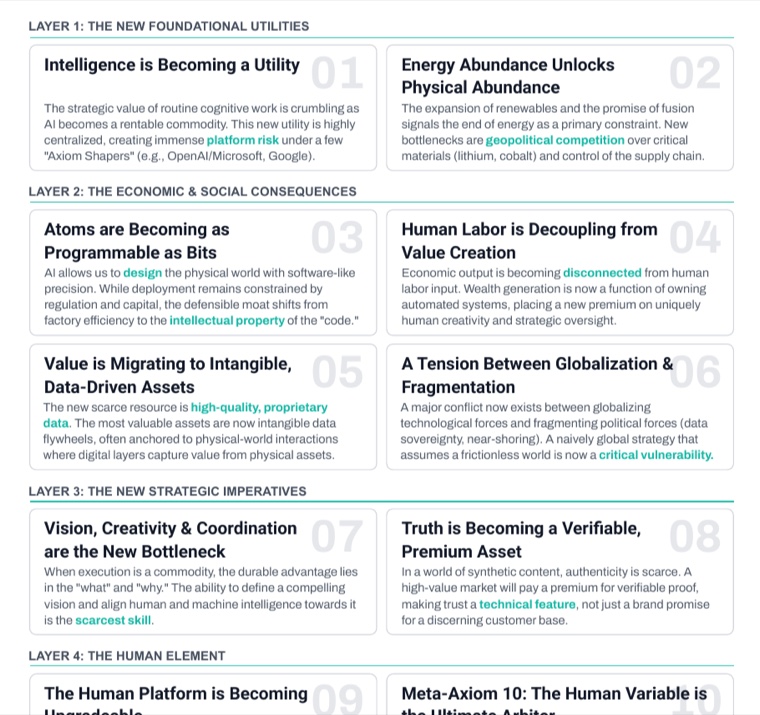
The Axiom Framework
Ten shifts for an economy that reorders itself in years, not generations.
Most strategy is written for a stable decade and then executed in a market that reorders itself in quarters. The pace is not a feeling. Economists found that generative AI spread faster than the personal computer or the internet at the same stage. It reached roughly two in five working-age Americans within about two years of its consumer launch. When a general-purpose technology arrives that quickly, the ground shifts while the plan is still being run.
Reading is free. We install it and run it with you.
If a framework names your problem, the next step is a working system in production, built in your accounts.