The context
Paid channels report through a blended, lagging number. Return on ad spend compresses a six-stage journey into one figure, which lands after the budget is spent. It also flatters itself. Meta and Google can each claim the same purchase, so platform-reported returns usually run ahead of the real one. Meanwhile a typical online store converts a low single-digit share of its visitors, a range industry benchmarks have held for years. Most of the spend is lost between the click and the order, and the blended number does not say where.
So teams do the intuitive thing and test more creative. Often the leak is nowhere near the ad. It may sit in a landing page that shows the price with no context. Sometimes a product page cannot turn views into carts, or a checkout surprises people with shipping.
The model
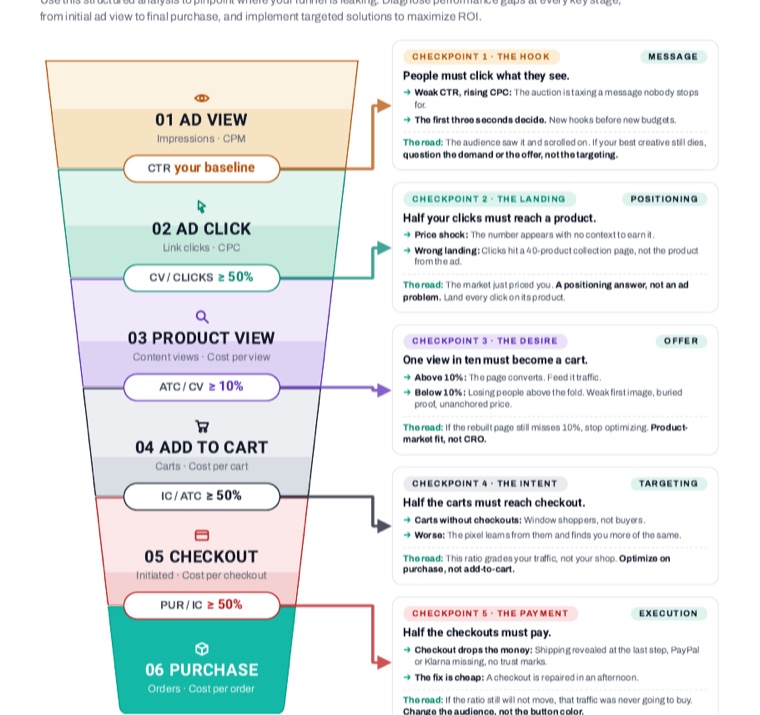
The model has six stages and five checkpoints: ad view, click, product view, cart, checkout, purchase. Each transition has a ratio and an operator threshold. Roughly half the clicks should reach a product. About one product view in ten should become a cart. Half the carts should reach checkout, and half the checkouts should pay. The first checkpoint that fails is the leak.
The ratios read deeper than marketing. A click that flinches at your price is a positioning answer. Product views without carts point at the offer. Carts without checkouts grade the traffic, not the shop. The thresholds are examples, not benchmarks. They shift with industry, price point, and use case, and you calibrate them against your own funnel.
What's inside
- Six stages and the five checkpoints between them
- An operator threshold for every ratio
- What each failing checkpoint actually diagnoses
- The upstream check before spending more
- One A4 page, built for print
Scope
Where it applies, and where it does not
Any paid funnel with enough volume to read stage by stage is a candidate. It shows where people leave, not why the whole business is stalling. It will not fix a product nobody wants, and it says nothing about retention once the first order lands. Below meaningful traffic, the ratios are too noisy to trust. When the real problem is demand rather than conversion, a positioning lens is the better tool.
OriginIt began with a founder asking where their funnel lost customers, and the answer fit on a single page. It was built on a live Meta ads funnel, with thresholds that shift by industry and use case.