The context
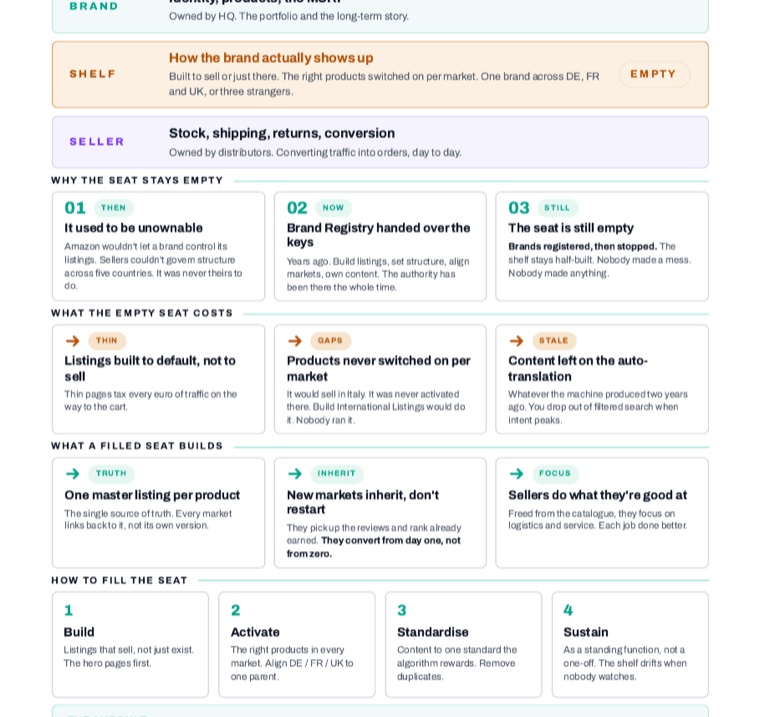
On a marketplace, a brand's presentation is a job someone has to do, and often nobody does it. Amazon's Brand Registry gives an enrolled brand real control over its own listings: titles, images, structure, and content. With an EU trademark, that control can extend across the European marketplaces at once. What Brand Registry does not do is clear the shelf. Other sellers can still list authentic products, and when several sellers share a listing, they compete for the Buy Box. So the way a brand looks across Germany, France, and the UK does not maintain itself and has to be governed.
Most brands enrolled years ago and then stopped, leaving listings built to default, markets never switched on, and content stranded on an old machine translation. No alarm goes off for any of it. The listings just underperform quietly, and nobody flags them.
The model
A marketplace is three jobs, not one. The brand layer owns identity, portfolio, and price. The seller layer owns stock, shipping, returns, and day-to-day conversion. Between them sits the shelf: how the brand shows up in each market.
Brand Registry handed brands the keys to that layer years ago. Filling the seat is governance. One master listing per product becomes the single source of truth, so new markets inherit the reviews and rank already earned instead of starting from zero. Content is standardized to what the algorithm rewards, and duplicates are removed. The one rule is that whoever runs the shelf cannot also sell on it, or the other sellers stop trusting them and start covering themselves. Done well, this frees the sellers to do what they are good at.
What's inside
- The three layers and who owns each
- Why the shelf seat stays empty
- What Brand Registry changed
- The cost of an unstaffed shelf
- Four steps to fill the seat
Scope
Where it applies, and where it does not
Brands sold across Amazon markets through resellers or mixed models, where nobody owns presentation, get the most from it. It does not apply to a pure first-party vendor relationship, or to a brand with a single, tightly controlled seller. It governs how the brand shows up and does not run logistics, set pricing strategy, or generate demand. If the catalog is small and already clean, someone owns the shelf in practice and the framework adds little.
OriginIt came out of our marketplace work for brands that sell through other companies.