The context
As an operation grows, each of those places gets its own tool that works well on its own. The trouble starts when one decision needs all of them at once. Finance exports CSVs, stitches the reports together and hopes nothing is missing. By the time the reorder or the price change goes out, the marketplace has moved on, and the business is acting on a slightly old picture.
Adding one more tool rarely helps, because it automates another fragment instead of the whole decision. The delay between what the marketplace shows and what the operation can act on then turns concrete. The result is a stock-out a joined view would have flagged, or a price left high after a competitor's cut.
The model
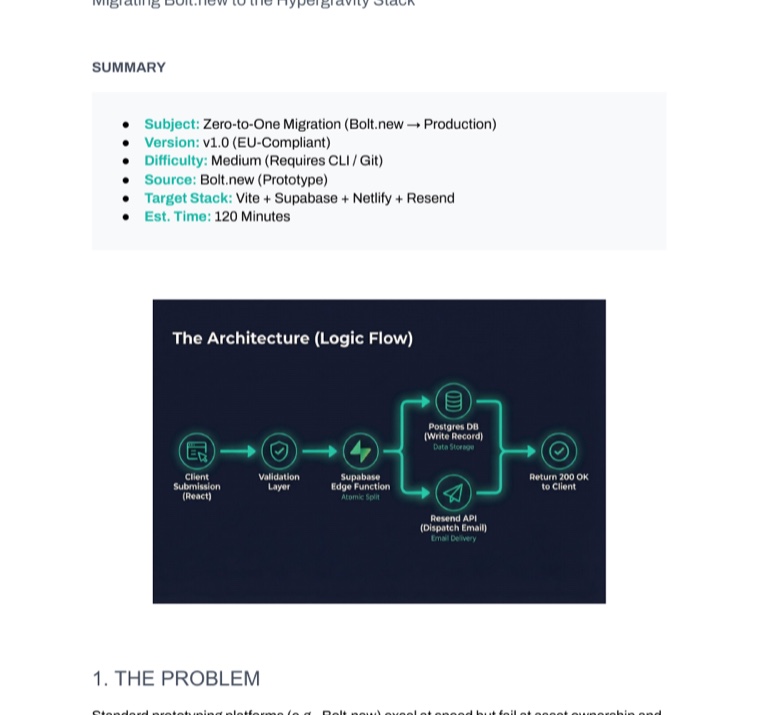
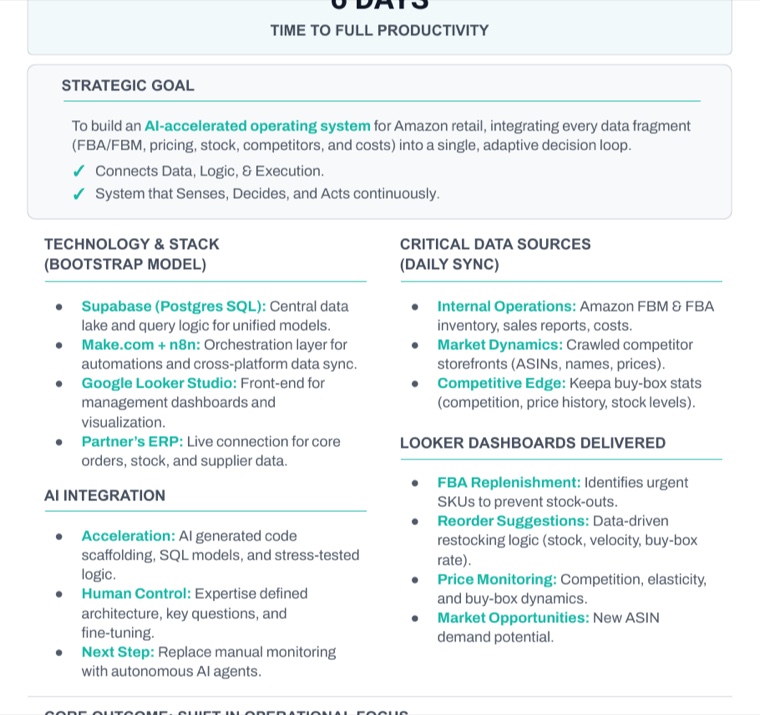
The layer sits above the existing tools. It pulls marketplace data, ERP, competitor prices and stock into one validated model that refreshes continuously. The model carries a few concrete jobs: flag products that will run out at FBA, suggest reorders from stock, sales speed and Buy Box rate, and watch competitor prices.
It is built from lightweight components inside the client's own accounts. Every figure reconciles to the ERP row by row, and anyone can check a number before trusting a suggestion. Judgment calls such as supplier negotiations and pricing strategy stay with people. Routine replenishment and price analysis run without anyone pushing them.
What's inside
- The bootstrap stack: Supabase, Make, n8n, Looker
- Critical data sources on daily sync
- Dashboards delivered to management
- Where AI sits in the decision loop
Scope
Where it applies, and where it does not
The layer pays off where decisions wait for someone to join data from several disconnected systems by hand. It runs operations and leaves strategy alone: what to sell and how to position it stay your call. A small single-channel business with clean data does not need it. The return grows with the number of systems that disagree.
OriginIt came from a six-day build for a distributor. There, one layer replaced a patchwork of tools and now reconciles six years of transactions in fifteen seconds.